Flask Walk garden clearance and bulky rubbish removal tips
Posted on 25/06/2026
Flask Walk Garden Clearance and Bulky Rubbish Removal Tips
If you are dealing with a tired garden, an awkward pile of broken bits, or one very stubborn sofa that will not fit down the stairs, you are in the right place. Flask Walk garden clearance and bulky rubbish removal tips are really about making a messy job feel manageable: less stress, less lifting, fewer surprises, and a cleaner finish at the end of the day.
In a place like Flask Walk, where access can be tight and neighbours are close by, a little planning goes a long way. The good news? You do not need a complicated system. You need a clear order of work, a sensible way to sort items, and a few practical habits that stop small problems from turning into big ones. This guide covers exactly that, from the first sweep of the garden to the final load leaving the property.
It also helps to know when a job is better handled by a professional team. Some clearances are straightforward, but others involve heavy lifting, mixed waste, awkward furniture, or garden material that builds up faster than expected after a weekend prune. Let's make it simpler.
- Why it matters
- How the clearance process works
- Key benefits and practical advantages
- Who this is for and when it makes sense
- Step-by-step guidance
- Expert tips for better results
- Common mistakes to avoid
- Tools, resources and recommendations
- Law, compliance and best practice
- Options and comparison table
- Case study or real-world example
- Practical checklist
- Conclusion
- Frequently asked questions
Why Flask Walk garden clearance and bulky rubbish removal tips Matters
Garden clearance is rarely just "take the leaves away". In real life, it often means hedge cuttings, soil bags, broken planters, old fencing, rotting timber, plant pots, bits of metal, and the occasional mystery item that nobody remembers buying. Bulky rubbish removal adds another layer: wardrobes, mattresses, shelving, white goods, and items that are too heavy to drag to the kerb without a plan.
The reason this matters on Flask Walk is simple. Streets with tighter access reward preparation. If you are carrying waste through narrow paths, shared entrances, or a front garden with uneven ground, every extra step matters. A sloppy clearance can damage surfaces, upset neighbours, and leave you with a bigger cleanup job than the one you started with. Not ideal, frankly.
Good clearance practice also matters because different waste streams behave differently. Green waste is not the same as mixed rubbish. Furniture is not the same as builder's waste. And if you put everything into one vague pile, you lose the chance to recycle properly and often make the removal more expensive than it needs to be. That is one of those small things people only notice after the van has arrived.
For local readers comparing service options, broader guidance on waste clearance in Hampstead and garden waste removal can help frame what a professional service usually handles and how different waste types are treated.
How Flask Walk garden clearance and bulky rubbish removal tips Works
The basic process is not complicated, but it does work best when done in order. Think of it as a short project rather than a one-off chore. First, you identify what needs to go. Then you sort it by type. After that, you decide what can be reused, what can be recycled, and what needs removal. Only then do you bring in tools, bags, or a collection service.
In a garden clearance, the aim is usually to create three clear groups:
- Green waste such as branches, grass, hedge trimmings, and leaves.
- Bulky items such as broken benches, old furniture, sheds parts, or storage units.
- Mixed waste like old plastic trays, damaged hose reels, rusty fixtures, and general clutter.
With bulky rubbish, the key question is not simply "how big is it?" but "can it be safely moved, dismantled, and loaded without damaging the property or someone's back?" A heavy chest of drawers, for example, may be better handled in parts. A dead hedge panel can often be cut down before removal. A mattress is usually easy to move, but awkward in a tight hall. You get the idea.
Most problems happen when people try to do too much in one pass. One bag becomes three. One damaged chair turns into a pile of broken timber. One afternoon becomes a whole weekend. That is why a measured approach is usually the smart one. If the job is larger than expected, a service such as rubbish collection in Hampstead or furniture removal may be the cleaner solution.
Key Benefits and Practical Advantages
There are obvious benefits, and then there are the ones people only appreciate afterwards. The obvious ones are speed, tidiness, and less lifting. The less obvious ones are better use of space, fewer complaints from neighbours, and less chance of leaving waste behind because the last 10% was too annoying to finish.
Here is the practical upside in plain English:
- You reclaim the garden faster, so it becomes usable again.
- You reduce trip hazards, which matters if children, visitors, or older relatives use the space.
- You can spot real garden issues again, such as broken paving, leaks, or root damage.
- You avoid multiple small trips to a recycling site or collection point.
- You are more likely to separate recyclable material properly.
There is also a timing benefit. If you are preparing to sell, rent, repaint, landscape, or simply enjoy the space before the weather turns, a quick, tidy clearance can be one of the highest-value jobs you can do. It is not glamorous. But it works.
For larger household clearances, it can help to see how a garden tidy sits alongside broader services like house clearance and loft clearance, especially if the clutter has spread beyond the garden.
Who This Is For and When It Makes Sense
This kind of guidance is useful for homeowners, tenants, landlords, letting agents, gardeners, and anyone who has looked at a pile of waste and thought, "Right. That's a job." It is especially useful if the property has limited access, a long rear garden, or items that are too large for ordinary bin collections.
It tends to make sense when:
- you have had a garden overhaul and the waste has piled up fast;
- you are replacing old furniture and need the bulky items taken away;
- you are preparing a property for new occupants;
- you are clearing after a move, renovation, or end-of-tenancy clean;
- you want to avoid making several awkward trips with a small car.
It also makes sense if you are not sure how to classify the waste. That is more common than people admit. Garden waste often looks simple until you are standing there with a broken parasol, three kinds of plastic, and a pile of wet branches. Funny how that happens.
If the clutter spills into other parts of the property, a broader waste disposal service or house clearance support may be more efficient than treating the garden in isolation.
Step-by-Step Guidance
Here is a simple process that works well for most Flask Walk garden clearance jobs. It is not fancy, but it keeps the day under control.
- Walk the space first. Look at the whole garden before moving anything. Check gates, paths, loose paving, wet patches, and any overhead hazards.
- Separate waste into clear groups. Green waste, reusable items, bulky rubbish, and anything that may need special handling should each have their own place.
- Identify awkward or heavy items early. Anything like old furniture, planters filled with soil, or broken shed panels should be dealt with before you start bagging loose material.
- Break down what you can safely dismantle. Cutting a branch into manageable lengths or unscrewing a panel can save time and reduce strain.
- Use strong bags, boxes, or bundles. Overfilled sacks split at exactly the wrong moment. Usually on the steps. Usually when you are already tired.
- Load in the right order. Heavy items first, lighter material on top if suitable, and fragile items never crushed underneath by default.
- Check for leftovers. Look under benches, behind pots, and along fence lines. Small debris hides everywhere.
- Finish with a sweep or rake. A garden clearance feels properly done when the surface is clean enough to use again straight away.
One practical point: if you are dealing with mixed rubbish and soil, do not assume it can all be treated the same way. Soil adds weight quickly. Wet green waste is heavier than it looks. And yes, it will test your bins and your patience.
For jobs involving a lot of moveable items, related services like furniture disposal and white goods and appliance disposal can be useful references if your bulky waste is not limited to garden material.
Expert Tips for Better Results
The best tip is usually the least exciting one: sort first, move second. A lot of people start hauling and only then realise they have created three extra piles. That is where time disappears.
Here are a few better-than-average tips that make a real difference:
- Photograph the waste before starting. Not for drama. Just so you can estimate the load and avoid under-ordering a collection.
- Keep a "don't move yet" pile. Items you may want to donate, repair, or reuse should stay separate until you are certain.
- Use the weather to your advantage. Dry green waste is lighter. Wet waste can be miserable. If there is a choice, you will notice the difference.
- Cut long branches down early. Long lengths create handling problems and can make loading awkward.
- Protect paths and thresholds. Old blankets or boards can prevent scuffs where bulky items pass through.
- Leave the heaviest move for the start of the day. That is when people are less tired and more careful.
And one more thing. If the waste is sitting near fencing, planting beds, or a shared wall, take your time. The fastest clearance is not always the safest one. Nobody needs a cracked slab or a dented gate because the job was rushed by ten minutes.
If you are planning related work, the service pages for builders waste disposal and insurance and safety can be helpful for understanding heavier-duty jobs and safe handling expectations.
Common Mistakes to Avoid
Most clearance headaches come from a handful of predictable mistakes. The good news is they are all avoidable.
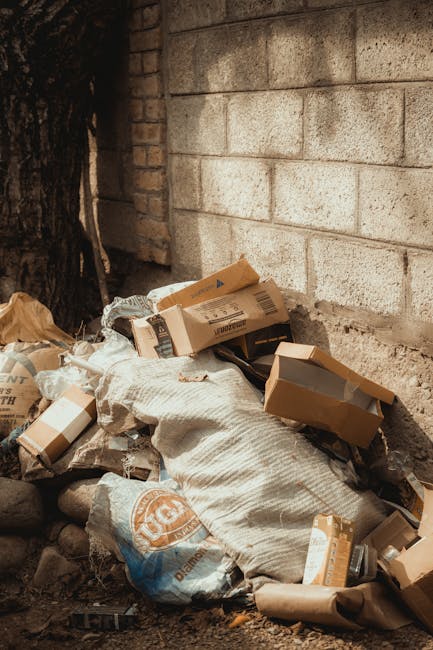
- Mixing all waste together. This makes recycling harder and can make the load less efficient.
- Underestimating access. A large item may fit on paper but still fail on a narrow corner or steep step.
- Ignoring hidden weight. Soil, wet leaves, and waterlogged timber can be much heavier than expected.
- Using weak bags. A split bag turns one tidy job into scattered debris.
- Forgetting the final sweep. Small fragments, broken glass, thorns, and nails often remain after the main waste is gone.
- Trying to move unsafe items alone. If something feels unstable, awkward, or too heavy, stop there.
People also forget the "boring" parts: lift clear routes, door widths, and whether the waste will need to be carried through the house. That can be the difference between a smooth collection and a rather embarrassing pause in the doorway. We have all seen it.
For anyone unsure whether to handle the job in one visit or in stages, the service overview and pricing and quotes pages are useful starting points when planning a larger clearance.
Tools, Resources and Recommendations
You do not need a warehouse of equipment. A few sensible tools make most clearance jobs much easier.
- Heavy-duty gloves for brambles, splinters, rust, and rough edges.
- Closed-toe footwear with decent grip. Trainers are not always enough on damp ground.
- Strong sacks or rubble bags for garden waste and mixed lightweight rubbish.
- Hand saw, secateurs, or loppers for cutting branches and reducing bulk.
- A broom, rake, and dustpan for the final clean finish.
- Tarpaulin or old sheets to keep paths and interiors cleaner during transport.
- Trolley or sack truck if you are moving multiple heavy loads, provided the route is suitable.
On the planning side, it helps to know your waste types before you book anything. Garden waste, household rubbish, furniture, appliances, and commercial waste are handled differently in normal practice. If your project includes old chairs, wardrobes, or office pieces, it may be worth looking at office clearance and commercial waste removal as comparison points, even for smaller jobs that have mixed contents.
If sustainability matters to you, which it often does in a local garden clearance, recycling and sustainability is worth a look because it reinforces the habit of separating reusable and recyclable material before anything is loaded.
Law, Compliance, Standards, or Best Practice
For waste removal in the UK, the safest rule is simple: use a carrier that is properly authorised to transport waste, and make sure you do not hand waste to anyone who cannot clearly show they are compliant. That is not overcautious; it is sensible. If waste is dumped illegally after collection, the person who handed it over can end up with a messy situation on their hands.
Best practice also means knowing that some items need more care than others. Electrical items, large appliances, and certain materials should be treated with proper caution and not mixed casually with garden waste. Even when a job seems straightforward, handling it as if every item is the same is where errors creep in.
In practical terms, the safest approach is:
- confirm who is taking the waste;
- check what waste they can accept;
- ask how recyclable material is separated;
- keep records or written confirmation where appropriate;
- avoid handing over waste to anyone whose setup looks vague or unfinished.
If you are ever comparing providers, pages such as waste carrier licence and compliance and terms and conditions are helpful indicators of how seriously a business treats proper waste handling and customer clarity.
And yes, this is the boring bit. But boring is good when it prevents avoidable problems later.
Options, Methods, or Comparison Table
Not every clearance needs the same method. Some people prefer to do it themselves in stages. Others want everything gone in one go. A quick comparison makes the choice easier.
| Method | Best for | Pros | Trade-offs |
|---|---|---|---|
| DIY clearance | Small, light, well-sorted garden waste | Low direct cost, full control | Time-consuming, heavy lifting, multiple trips |
| Skip-style bulk removal | Larger projects with ongoing waste generation | Good for staged work, flexible over time | Needs space, may not suit tight access |
| Professional collection | Bulky items, mixed loads, awkward access | Fast, labour included, less hassle | Usually higher cost than doing it yourself |
| Hybrid approach | Mixed clearances where some items can be pre-sorted | Efficient and often cost-effective | Requires planning and a little discipline |
In practice, the hybrid approach is often the sweet spot. You do the easy sorting, bagging, and separating at home, then bring in help for the heavier items. It cuts down the awkward bits without making the whole job a marathon.
Case Study or Real-World Example
Imagine a typical Flask Walk garden after a long season: a broken bench at the back, a stack of cracked pots, tangled cuttings from a hedge trim, a few damp bags of old soil, and an unused rattan chair that has seen better days. Nothing dramatic. Just one of those gardens that slowly slipped from "fine" to "we really should sort that".
The first sensible move is not loading the van. It is setting the waste out into zones. Green waste goes in one pile. The bench and chair go in another. Pots, plastic trays, and mixed debris go into a third. Once that happens, the job becomes much less intimidating. The bulky items can be measured for safe lifting, the garden waste can be bundled, and the mixed bits can be bagged without creating chaos.
In a real clearance like that, the biggest win is usually not speed. It is control. The space becomes readable again. You can see the path. You can see the fence line. You can tell what is salvageable and what is simply in the way. The last sweep is the nice bit, truth be told. That moment when the garden suddenly feels like a garden again.
If the project spreads into the home as well, a combined approach with furniture disposal in NW6 and Hampstead or waste clearance across Hampstead and NW6 can make the whole job easier to coordinate.
Practical Checklist
Use this checklist before you start. It keeps the job tidy and stops the classic "oh, I forgot that" moment halfway through.
- Walk the area and identify access points.
- Separate garden waste from bulky household items.
- Check for nails, glass, sharp edges, or unstable parts.
- Decide what can be reused, repaired, recycled, or removed.
- Gather gloves, sacks, cutting tools, and cleaning tools.
- Protect floors, paths, and doorways if items need to pass through the house.
- Keep heavy items low and manageable.
- Do a final sweep for debris, fragments, and loose fixings.
- Confirm the waste route is clear before loading starts.
- Book the right removal help if the job looks bigger than expected.
If you only remember one thing from this list, make it the access check. That is the step people skip most often, and it causes the most avoidable hassle. A minute spent looking can save an hour of muttering later.
Get a free quote today and see how much you can save.
Conclusion
Flask Walk garden clearance and bulky rubbish removal tips are really about keeping a simple job from becoming a stressful one. Sort the waste early. Respect the weight of what you are moving. Protect access points. Finish properly. Those basics sound almost too simple, but they are exactly what make a clearance feel smooth instead of chaotic.
Whether you are tackling a small backyard tidy, removing old garden furniture, or clearing a mixed pile after a bigger project, the best result comes from steady, sensible steps rather than heroic effort. And if the job turns out larger than expected, that is not a failure. It is just information. Useful information.
Done well, a clearance gives you back space, calm, and a bit of breathing room. That is worth a lot on a busy London street.